Why does the type of feedback matter?
Many SaaS and digital product teams collect input through forms, support inboxes, feedback widgets and feature request boards. Yet a bug report, a product complaint and a suggestion from a power user often end up mixed together.
Without a structured customer feedback software or feedback management software, it becomes difficult to turn this input into real product decisions.
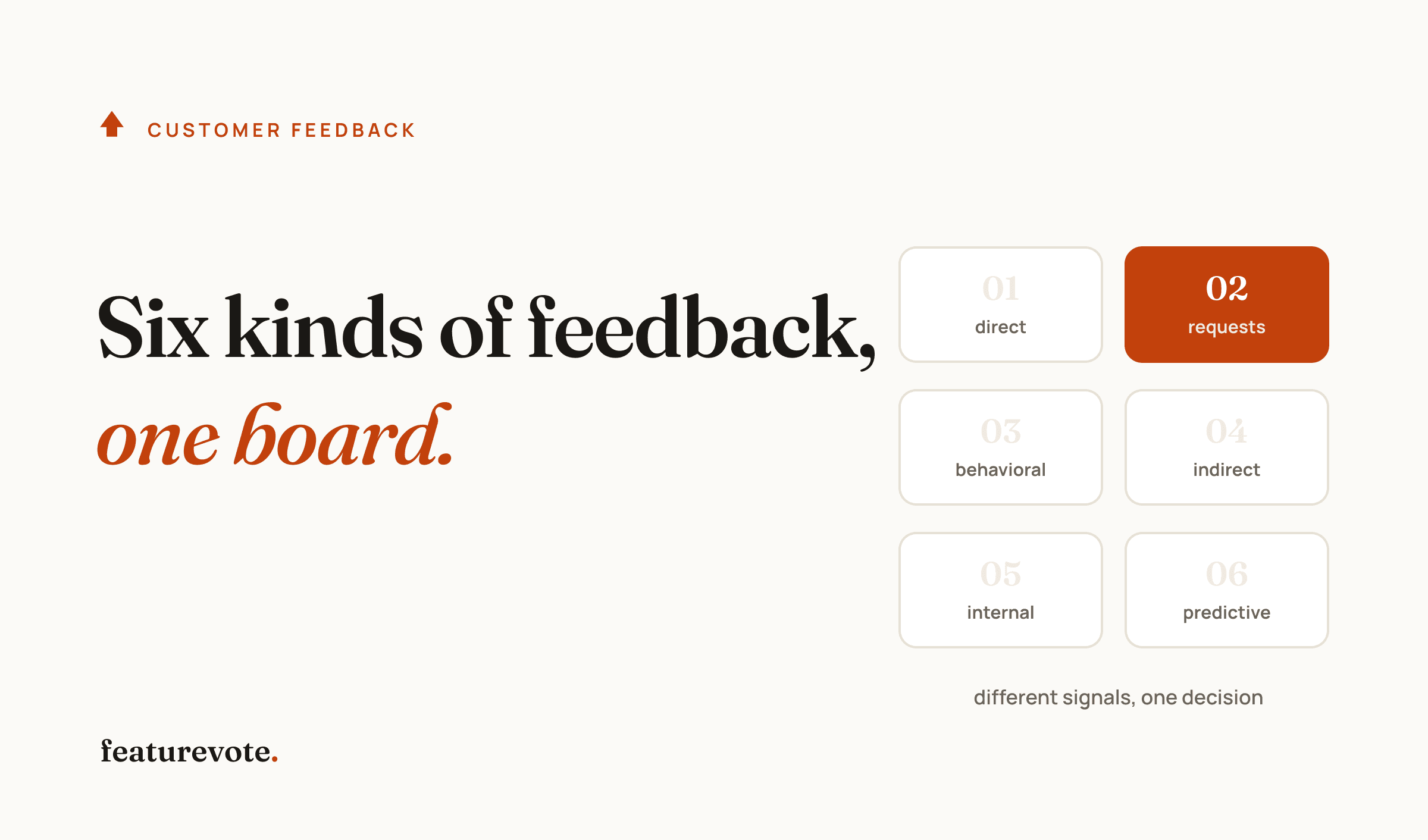
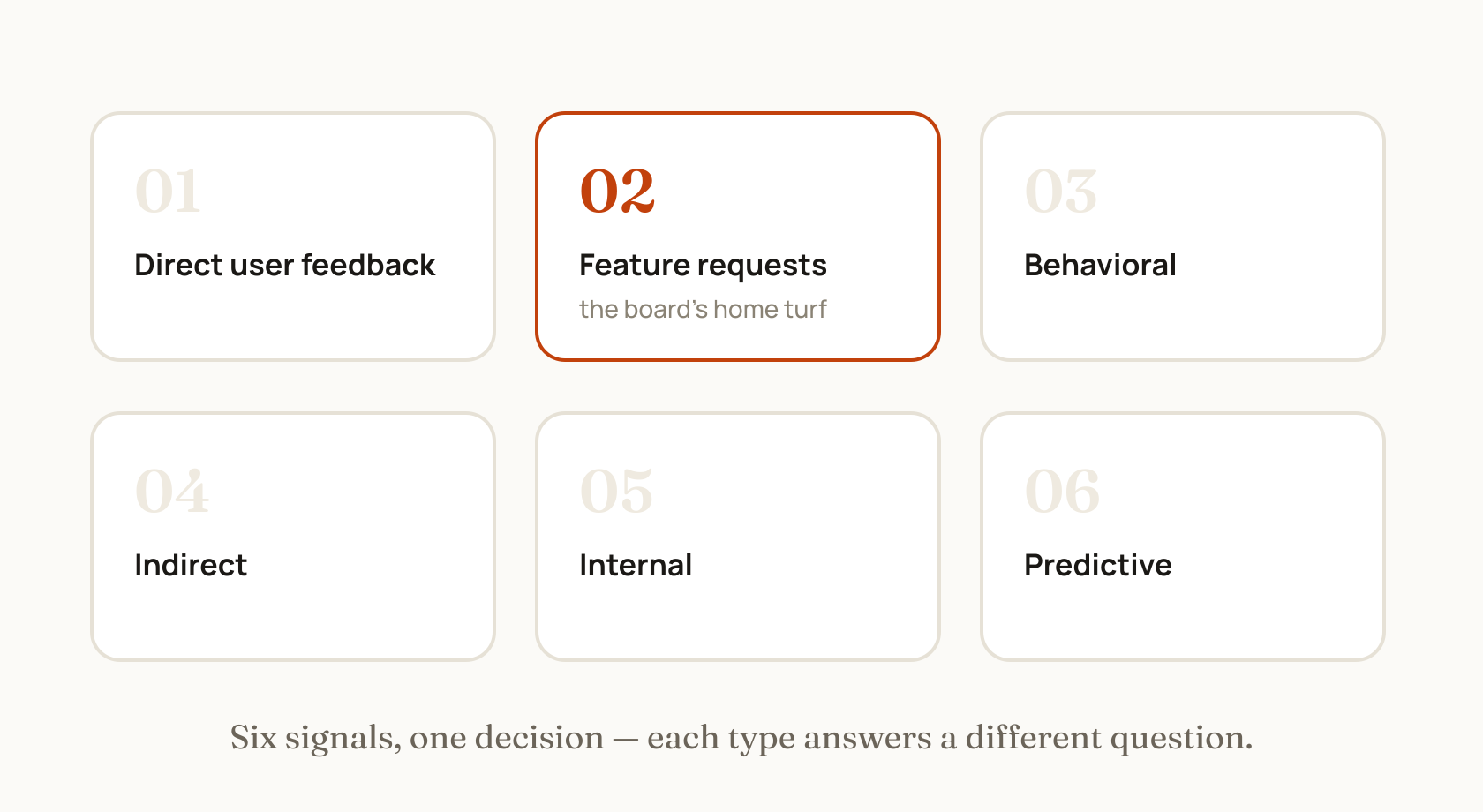
By understanding six key types of feedback, teams can prioritise based on patterns, impact and context. Instead of reacting to individual complaints, product teams can analyse feedback through a structured product feedback platform, identify trends and make data informed decisions that improve the product.
1. Direct User Feedback
Direct feedback is the most visible type of input. It appears in support inboxes, chat conversations, help desk tickets or an in app feedback widget. This kind of feedback is usually reactive, specific and often urgent.
Examples include:
“I can’t find where to export my data”
“The app crashes every time I upload a file”
Direct feedback highlights friction that prevents users from succeeding.
How to use it:
Track recurring issues rather than isolated complaints. Patterns reveal UX problems.
Connect feedback to user segments such as new users versus power users.
Close the feedback loop by informing users when their issue is fixed.
Using a structured product feedback tool or customer feedback portal helps teams organise these insights and respond faster. Done well, direct feedback becomes a powerful driver of retention.
2. Feature Requests
Feature requests are exciting but also risky. They create the illusion that the next product decision is obvious. In reality, most requests represent a proposed solution rather than the real underlying need.
For example, when someone asks for dark mode, they might actually mean the interface feels too bright during nighttime use.
A structured feature request software or feature request tracker can help capture these ideas in a way that reveals patterns rather than isolated opinions. What a feature request tool replaces, and how it keeps the list from turning into a dump, is covered on its own page.
How to use them:
Always ask why the feature is needed before logging the request.
Group similar requests on a feature request board or public feedback board so users can vote.
Tag requests by goal such as time saving, customisation or collaboration.
This approach turns raw ideas into meaningful signals for feature request management and helps teams understand what users truly need.
See for yourself
Featurevote is a feature voting tool that turns suggestions into a structured, actionable workflow, so you stop juggling feedback across emails and support tickets.
3. Behavioral Feedback
If direct feedback tells you what users say, behavioural feedback shows what they actually do.
Behavioural insights appear in product analytics, heatmaps and usage dashboards. This data often reveals hidden friction:
Users drop off during onboarding step two
Only a small percentage click “Invite team members”
A recently launched feature gets almost no usage
This type of insight forms the foundation of product feedback analytics.
How to use it:
Track key activation and engagement events.
Combine analytics with qualitative feedback collected through a user feedback tool.
Investigate low usage carefully. Sometimes the issue is poor discoverability, not low value.
Behavioural feedback allows teams to prioritise using data rather than assumptions.
4. Indirect Feedback
Indirect feedback comes from channels outside your direct control. Examples include social media, review platforms, community forums and public Slack groups.
Because it is unfiltered, it often reveals honest opinions about your product and brand.
Examples include:
“Love this app, but integrations are limited”
“We switched because the other company actually responds to feedback”
“The tool is great, but I wish it had a mobile app”
How to use it:
Monitor discussions on platforms like Reddit or Product Hunt.
Categorise sentiment to identify praise versus frustration.
Track recurring phrases that shape your brand perception.
Indirect feedback provides valuable context that complements insights from your customer feedback portal or product feedback board.
5. Internal Feedback
Some of the most valuable insights come from inside your company.
Sales representatives, customer success managers and support agents hear recurring questions and objections every day.
Examples include:
“Every prospect asks if we integrate with HubSpot”
“Customers say the setup process is confusing”
These insights should be captured in a shared feedback board or internal idea management software.
How to use it:
Create an internal board where colleagues can log product insights.
Tag feedback by frequency or revenue impact.
Share product outcomes when something is built or improved.
Internal feedback connects daily customer conversations with your product roadmap software, ensuring the roadmap reflects real market needs.
6. Predictive Feedback
Not all feedback is explicit.
Predictive feedback appears as behavioural signals that indicate declining engagement. These subtle changes often appear before churn happens.
Examples include:
Active users stop engaging with emails or product updates
Trial users repeatedly visit the pricing page but never convert
Paying customers reduce usage or remove team members
These signals can be monitored through analytics combined with feedback collected via a feedback management software or product feedback analytics tools.
How to use it:
Track engagement trends and set alerts for unusual behaviour.
Reach out early with curiosity rather than a sales pitch.
Combine usage signals with direct outreach to understand what might be missing.
Predictive feedback allows product teams to intervene early and protect retention.
Frequently asked questions
Which type of feedback should I collect first?
Direct feedback and feature requests, because they arrive on their own and cost nothing to capture. Behavioural and predictive signals need instrumentation and a habit of looking at it, so they are a second step rather than a first one.
What is the difference between a feature request and direct feedback?
A feature request proposes a solution. Direct feedback describes an experience. "Add a bulk export button" is a request; "it takes me twenty minutes every Monday to pull my numbers out" is feedback, and it is the more useful of the two because it leaves the solution open.
How do I stop feature requests from drowning out everything else?
Keep them in their own place. A feature request board lets requests accumulate and be voted on without them competing for attention with bug reports and support threads, which is what happens when everything lands in one inbox.
Is internal feedback less valuable than customer feedback?
No, but it is differently biased. Your team sees the product every day and knows where the bodies are buried; they also have no idea what a first-time user finds confusing. Neither owns a category — a customer will report a crash and your own team will notice a missing integration. What differs is the blind spot: your team cannot see the product for the first time, and your customers cannot see what it would cost to build.
How many feedback types do I actually need to track?
However many you will actually look at. Most small teams get most of the value from the first two, plus a churn signal. Tracking all six badly is worse than tracking two well.
Build Products People Love
Choose the kinds of feedback that help answer the questions your team has.
Collect feedback systematically. Analyze it thoughtfully. Ship with confidence.